
DHOAS Loans
Get clear on your housing benefits and how to use them before the opportunity passes by
A DHOAS loan helps recognise your service with a subsidised path into home ownership. If you have the qualifying service time, you may already be eligible.
The key is using it well. Deployments, postings, and shifting timelines can make planning tricky, so your DHOAS loan needs to be structured to suit your pay, your movements, and your long term goals.
You get guidance that fits the realities of ADF life, helping you use your DHOAS loan to build a stable base, whether it is your first home, a housing investment, or a long term foundation for life after the ADF.

Secure a home, grow equity, or retire debt-free with a DHOAS home loan
The Defence Home Ownership Assistance Scheme (DHOAS) is a government program that helps current and former members of the Australian Defence Force and their families to buy a home.
If you’ve served in the ADF on or after 1 July 2008, you could qualify for a monthly payment that helps cover your ADF home loan. The longer you’ve served, the more you could receive. The eligibility is based on your length and type of service, so it’s worth checking where you stand.
As of 2023, changes to the eligibility criteria mean more people now qualify for the benefit.
But understanding how it all works can get overwhelming. And paperwork and rules can feel confusing. That’s where a defence mortgage broker like Defence Finance can help.
With a broker who specialises in ADF members and veterans, you’ll know your options better, get a personalised guide through the home-buying process, and make sure you’re making the most of your DHOAS entitlement now or in the future when you can leverage the entitlements.

Build a loan strategy that fits your service life
There’s no one-size-fits-all loan. With DHOAS, you can choose between fixed and variable rate loans, redraw and offset, depending on what suits your situation. A DHOAS loan gives you room to shape your approach around your service commitments and long-term plans.
A variable-rate loan means the interest can rise or fall with the market. A fixed-rate loan holds your interest steady for a set period, such as 1, 3, or 5 years, which can make budgeting more predictable during that time.
Choosing the right loan depends on how long you expect to stay in the home, how much certainty you want in your repayments, and what you’re working towards over the long term.
As defence personnel, you have real choice and flexibility with your loan options.
A DHOAS loan specialist like Defence Finance can help you compare products and make a clear, confident decision. The loan isn’t just a now commitment but a long-term contract. Your posting plot and career path should be factored in when selecting the structure that works best for you.
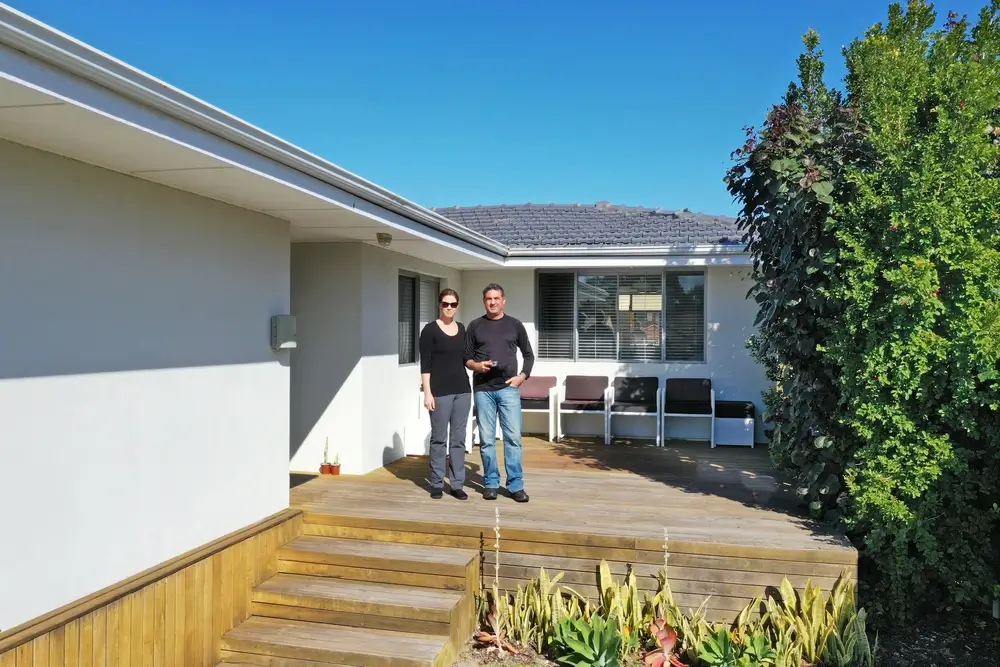
You may still be eligible for a DHOAS home loan after the uniform comes off
Leaving the ADF doesn’t mean your DHOAS benefits stop. Many assume that once they finish service, their options close off, but that’s not the case. Depending on your qualifying service as an eligible Australian Defence Force member, you may still have access to years of support, including monthly help with the interest on your DHOAS loan. The main task is working out how long you’ve served, what counts as qualifying service, and whether it’s better to use your entitlement now or hold it for later. You don’t need to guess. You can check what benefits still apply, which loans suit your circumstances, and how you can continue to use your entitlements after transition.

Know where you stand with DHOAS
To qualify for DHOAS, you must have served on or after 1 July 2008 and completed a required amount of service, known as your “qualifying period.” This determines when your DHOAS loan entitlement becomes available.
There are three benefit tiers, based on how long you’ve served. Longer service usually means a higher monthly subsidy. Updates made in January 2023 have also made it easier for more current members and veterans to meet the criteria.
If you’re unsure where you sit, it’s worth confirming. You might be closer to accessing your benefit than you think, and a clear understanding of your eligibility helps you make informed decisions about how and when to use your DHOAS support.

DHOAS gives you what banks and other loan options don’t
Under the DHOAS loan, eligible ADF personnel and veterans can access subsidies and support that make home ownership more achievable. Key benefits include:
Available Subsidies
A major advantage of the DHOAS loan is access to service-based subsidies. These are calculated using your length of service and accumulated service credit. Subsidies can help reduce monthly repayments or shorten your loan term.
Flexibility
The DHOAS loan supports both current serving members and veterans. Eligibility is based on service credits earned through your time in service or qualifying warlike service. Speaking with a defence-focused mortgage adviser can help you find the right structure for your circumstances.
Easy Eligibility
To remain eligible for the DHOAS loan, borrowers must meet the occupancy requirement—living in the property for at least 12 months. This is especially important to review if you have a posting order within that period.
Feedback from those who’ve navigated their DHOAS loan with confidence
Use your DHOAS benefit in 4 straightforward steps
Check if you're available
Not sure if you can still use DHOAS now that you’ve discharged? Or wondering if your service credit is enough? You’ll answer a few quick questions to see where you stand. We will make sure you are connected with the correct team at DVA to ensure there is nothing in your service that causes issues.
See which lenders actually offer DHOAS loans
The DHOAS panel only has three providers, each with their own pros and cons. You'll get a clear understanding of the products available and how the comparison rate works once the subsidy is included. This helps cut through the myths and gives you a straightforward picture of what the scheme really offers.
Avoid wasting time on the wrong lenders
Most banks don’t advertise it, and not all of them offer DHOAS loans. You'll get a clear list of which lenders actually work with the range of DHOAS options, so you’re not wasting time chasing the wrong ones.
Get help with the submission
There’s no avoiding some forms, but you won’t be stuck doing it alone. Assistance is provided to set up your file and supply an application designed to address bank risk, ensuring that applications are not declined due to insufficient understanding of ADF members' income, postings, or career pathways.
Book a quick 10-minute call to understand your ADF property options
If you’re unsure whether DHOAS is worth using, or confused by tiers, service credits, and timelines, you’re not alone. Many ADF members find the system unclear without guidance.
Book a 10-minute call for clear, practical answers from someone who understands defence life and how DHOAS works. There’s no pressure or obligation, just a chance to ask questions, understand your position, and plan your next move with confidence. Your details are handled securely and confidentially.
In your quick call, you can:
- Find out if you meet the DHOAS criteria based on your current or past ADF service (including if you’re already discharged)
- Learn how much monthly subsidy you might be entitled to and how long it could last
- Ask whether it makes sense to use your benefit now or wait until later
- Understand how to avoid losing your entitlement due to timing or paperwork mistakes
- See how much you could actually borrow with a DHOAS-approved lender, and what comparison rates based on your situation might look like
- Discover how much you could actually borrow with a DHOAS-approved lender
- Learn how to include all fees and charges when weighing up your loan options
A limited number of calls are available each week, so bookings are offered on a first-available basis.
Schedule your call with an expert broker who specialises in supporting defence members and get clear, tailored property guidance from professionals experienced in defence lending and entitlements.
Things you're probably wondering about DHOAS
How does a DHOAS home loan actually work?
A DHOAS loan helps you with your home loan by giving you a monthly payment directly to your loan account. That means if you’re eligible, the government pays part of your home loan, which can save you money every month. You still have to apply for a normal home loan through a lender that offers DHOAS loans. Then, once approved, you’ll get help through the Defence Home Ownership Assistance Scheme (DHOAS).
The amount you get depends on how long you’ve served in the ADF (this is called service credit) and what tier you fall into. There are 3 tiers: the longer you’ve served, the higher the tier, and the more money you can get.
To start using it, you’ll need a DHOAS certificate of entitlement, which shows you qualify. Don’t apply for a certificate until you have spoken to an expert as they expire after 12 months and there is only one certificate issued after discharge. An application does not need a certificate and this issues causes the most problem when I’ll informed brokers tell veterans to apply for the certificate before they commence the application and then have issues with deposits or servicing the loan. Once you apply for a home loan with one of the DHOA lenders and are approved you can link the loan to the entitlements. It sounds like a lot, but once it’s set up, it runs in the background and saves you money over time.
- Speak to an expert before applying for your DHOAS certificate of entitlement. This step is important, as applying too early can cause unnecessary complications.
- Only apply for the certificate when you are ready to proceed, since it expires after 12 months and you can only be issued one after discharge.
- Begin your home loan application with a DHOAS-approved lender. You do not need the certificate at this stage. You do not need a certificate to start your application. Many problems arise when ill-informed brokers advise veterans to apply for the certificate too early, which can lead to issues with deposits or servicing the loan.
- Once your loan is approved, you can then link your new home loan to your DHOAS entitlements.
It might sound like a lot to manage, but once everything is set up, the scheme runs in the background and helps you save money over time.
You can use it to buy your first home, upgrade to a better one, or even refinance an existing loan if it fits the rules.
Can I still use DHOAS after leaving the military?
After you leave the Australian Defence Force (ADF), you can still access your DHOAS benefits. However, it is essential to plan carefully, as you will only be able to obtain one Certificate of Entitlement following discharge. Understanding your loan position and the available loan amounts is crucial, especially since unless you have 20 years of service, you will revert to tier one. This makes it important to use the credit system to your advantage.
One key distinction to consider is the difference between applying through a broker versus going directly to a lender. A broker can submit your application to a range of home loan providers, ensuring your situation and product take full advantage of each lender’s unique offerings.
It is advisable to obtain your Certificate of Entitlement before discharge, as serving members are eligible to receive multiple certificates. This allows you to understand your entitlement clearly while you are still serving. If you are unsure about your service credit or qualification, you can contact the Department of Veterans’ Affairs (DVA), which reviews your PMKeys records. Defence Finance will provide the correct contact details, helping you become informed about how mortgage credit works and how to make the most of your entitlement.
So yes, you can still use it after discharge. Just make sure you plan ahead and know your deadlines.
Which banks or lenders offer DHOAS home loans?
Not all banks do DHOAS loans, so knowing where to look can save you a lot of time. At the moment, only three lenders are approved under the scheme: Defence Bank, Australian Military Bank, and NAB (National Australia Bank). Lenders have to tender every five years and meet strict criteria to become a provider.
Each provider offers its own loan products, interest rates, and features, though many of the options are broadly similar. The key differences usually come down to interest rates and specific product features, which can shift with market conditions.
NAB does not allow brokers to write DHOAS loans and has an inexperienced DHOAS team that has no understanding of Defence. This is disappointing given 76% of home loans are written by brokers, and ADF members miss out on the opportunity to be guided and assisted by experts.
AMB has a broker channel, and the top 3 DHOAS writers in Australia (of which Defence Finance is one) have access to Defence Bank. This becomes an issue as brokers see NAB on the panel and can write normal NAB products, thus starting the application before hitting hurdles and having to hand the application directly to the bank or, more often, try to sell another lender’s product to make the sale. This is usually done by pushing another lender with a lower advertised interest rate, but once the subsidy is included the comparison rate is not competitive.
Defence Finance has an exclusive comparison rate calculator that is provided to the client to give an understanding of comparison rates as used when comparing products and required under law. No current software allows for an addback in their comparison and only adjusts based on fees.
Using a Defence-focused broker becomes essential when moving around this system, as your local broker may not have the experience to complete once-a-year applications. You don’t want to waste time explaining the scheme to someone who’s never heard of it, or worse, they try to push another product to ensure they receive a commission.
Take your time, ask questions, and make sure the loan suits your life now and later on.
What’s this “service credit” thing, and why does it matter?
ervice credit is basically the number of days you’ve served full-time in the ADF. The more service credit you’ve built up, the better your DHOAS benefit will be. It decides which tier you fall into, and that affects how much the government pays towards your loan interest.
There are three tiers:
- Tier 1 starts at 2 years of effective service for fulltime members and 4 years for Reservists.
- Tier 2 kicks in after 4 years of effective service for fulltime members and 8 years for Reservists.
- Tier 3 starts once you hit 8 years of effective service for fulltime members and 12 years for Reservists.
Each tier gives you a monthly subsidy against the stated tier level and increase if your loans is larger than the tier maximum.
If you’re not sure how much service credit you have, you can request a record from the Department of Veterans’ Affairs. Your entitlement will automatically increase (subject to your loan size) when you reach the next tier level and there is no need to reapply.
Knowing your service credit helps you plan smarter. You’ll know what you can afford, how much help you’ll get, and whether it’s the right time to buy or wait.
Do I have to live in the house to get the DHOAS benefit?
Yes, you do. One of the main rules with DHOAS is that the home must be your principal place of residence, typically aligned with your current or intended posting location. That means you can’t use DHOAS to buy an investment property or something you plan to rent out straight away.
You can buy a property in a future posting location with a DHOAS lender and apply for the subsidy once you move in and occupy it as your principal residence. This helps if you’re purchasing ahead and want to avoid applying for two loans.
When you use DHOAS, you need to live in the home for at least 12 months after settlement, as this is a key condition to help achieve home ownership. You must be occupying the home and holding a valid subsidy certificate before your subsidy payments can commence. If you move out earlier than that, you could lose your subsidy. They call this the “occupancy requirement,” and it’s checked by the Department of Veterans’ Affairs (DVA). This requirement can be met by one or more of your dependents if you are away from home.
After the first year, things are more flexible. The payment continues on the loan to allow for posting to occur and not lose your subsidy. If you plan to refinance or access equity for renovations, the 12-month occupancy starts at the time of the new loan.
What happens if I already have a home loan? Can I switch to DHOAS?
Yes, switching is possible, but it depends on your current situation. If you already have a regular home loan and you’re eligible for DHOAS, you might be able to refinance your loan through one of the approved lenders that offer DHOAS products. This would let you start receiving the monthly subsidy on your interest repayments.
Here’s what you’d need to do:
- Check your eligibility and apply for your Subsidy Certificate.
- Make sure your home is your primary residence (you’re living in it).
- Apply to refinance your loan with a DHOAS-approved lender.
- Get approval and settle the new loan.
Just keep in mind, refinancing isn’t always free. There might be exit fees from your old lender or setup costs with the new one, although these have been reduced from previous years. So, make sure the savings from DHOAS outweigh those costs before making the move.
Also, your loan needs to meet certain DHOAS conditions, like being within the maximum subsidised loan limits. If your loan is above that limit, only part of it will get the subsidy.
If you’re unsure where to start, it’s worth taking time to look into the fine print and maybe ask a home loan specialist who understands military entitlements.
Is it better to use my DHOAS benefit now or wait?
That really depends on your plans and where you’re at in life. If you’re ready to buy a home and you’ve built up enough service credits, using DHOAS now might make sense. You’ll get more financial help and could save thousands on interest over the years. Unless you plan to complete 20 years service and have tier 3 for all your service credits, even a loan at tier one makes sense as that is the figure you revert to on discharge.
Also, consider if you’re settled or likely to move again. If you’re posted often or unsure where you’ll be, waiting until you’re more stable can be a better option.
DHOAS doesn’t disappear overnight, and eligible ex-serving members can apply for it at any time post-discharge. Just make sure you don’t miss the window to use it once eligible.
Look at your career path, family plans, and finances. Then decide if now’s the right time or if patience will pay off.
What’s the difference between the three DHOAS tiers?
The three tiers in DHOAS are based on how long you’ve served in the ADF. Each tier gives you a different level of subsidy limit. The subsidy is calculated at 40%, 60% or 80% of the average housing price for that financial year. The higher the tier, the more the government pays toward your home loan repayment.
Here’s a simple breakdown:
- Tier 1: 2 to 4 years of service. You get the smallest subsidy and the lowest loan cap.
- Tier 2: 4 to 8 years. The benefit increases, helping you with more interest each month.
- Tier 3: 8+ years. This is the top level. You get the highest subsidy and can claim it for longer.
Even if you’re not at Tier 3 yet, Tiers 1 and 2 can still provide decent savings. It all comes down to your planned length of service and your loan amount.
As the payment is calculated on your first loan draw down, you can maximise the entitlement while at a lower tier and will move up in subsidies as you continue your service. This is poorly understood and, thus, an expert on this scheme is required to maximise the payments.
Keep an eye on your service credit, which is the amount of financial support you build up during your service. This service credit determines the amount of subsidy (meaning the government’s contribution to your home loan repayments) that will continue after you leave Defence.
The scheme allows you to use these service credits after discharge, so you don’t need to rush into buying a home just to secure your entitlement (the benefit you’re eligible for under DHOAS). This way, if you choose to use your entitlement later in your career, your accumulated credits will still be available to support you after you leave Defence.
Will I get rejected if I don’t meet all the fine print?
It’s a common worry, and fair enough. DHOAS does have rules, but many people who think they won’t qualify actually do. The most important parts are your service credit (how long you’ve served), your discharge, and whether the home will be your primary residence.
You don’t need perfect credit or a huge deposit to get started. The actual loan approval still goes through a bank, so standard lending rules apply, like income checks, debts, and spending habits. But your DHOAS eligibility is separate from that.
If you’re not sure about something in the fine print, don’t assume you’re out. A quick check with the Department of Veterans’ Affairs or reading through the official DHOAS website can clear up most doubts.
And remember, you’re not locked into using DHOAS right away. You can take time to learn about it, get your certificate, and figure out your timeline. Rejection isn’t common if you meet the core criteria.
Start with small steps. Get the facts, confirm your service credit, and go from there. Most of the confusion comes from uninformed myths around Defence rather actually being denied.
How much money could I actually save with a DHOAS loan?
How much you save depends on your tier, loan size, and how long you stay in the home. But in real numbers, DHOAS can cut thousands off your home loan interest over the years. The entitlement is linked to the average home loan. Thus, as rates decrease, so does the subsidy.
At Tier 1, the monthly subsidy might be around $500. At Tier 3, it can be $1000 or more per month, depending on the current interest rate. Multiply that by 12 months, and you’re saving anywhere from $6,000 to over $12,000 per year.
Over 10 years or more, that adds up fast . DHOAS can really boost your savings. But even short-term, it gives you breathing room in your budget, especially helpful during big life transitions like discharging or starting civilian work.
The best part? The subsidy isn’t taxable income. It’s pure savings that help you own your home sooner. The subsidy is a reportable Fringe benefit and its classification changes if the property is rented.
For further information about how DHOAS may impact your personal tax obligations, please call the Defence Tax Management Office on 1800 806 053.